What Percentage Of Postmenopausal Bleeding Is Caused By Cancer : Postmenopausal Bleeding Causes Diagnosis And Treatment : Treatments for many types of cancer can weaken your body's ability to fight off disease.
Dapatkan link
Facebook
X
Pinterest
Email
Aplikasi Lainnya
What Percentage Of Postmenopausal Bleeding Is Caused By Cancer : Postmenopausal Bleeding Causes Diagnosis And Treatment : Treatments for many types of cancer can weaken your body's ability to fight off disease.. Primary immunodeficiency is caused by genetic defects that can be inherited. For instance, postmenopausal vaginal bleeding can be caused by: Postmenopausal bleeding is vaginal bleeding that occurs a year or more after your last menstrual period. It can also signal vaginal or cervical cancer. It occurs in up to 10% of women aged over 55 years.
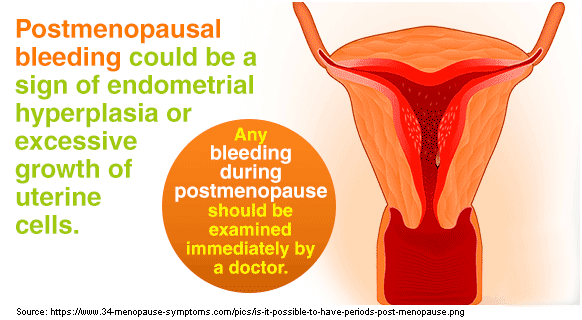
Body fat percentage was associated with an even higher risk of breast cancer among women using hormone replacement therapy thus, researchers found that obese postmenopausal women using hormone therapy had a critical level of risk for developing breast cancer or other types of malignancies. A lthough relatively common, vaginal bleeding is considered abnormal when reported in a woman who has passed the onset of menopause.1 in approximately 20% to 30% of cases of postmenopausal vaginal bleeding, the cause may be attributed to endometrial cancer or atypical endometrial. Doctors also use it to remove thickened parts of the uterine lining caused by endometrial hyperplasia. Cervical, endometrial, or uterine cancer. Postmenopausal bleeding is vaginal bleeding that happens at least 12 months after your periods have stopped.
How Serious Is Postmenopausal Bleeding Women Fitness Magazine from www.womenfitnessmag.com It can also signal vaginal or cervical cancer. Breast, ovarian, endometrial, lynch syndrome → autosomal dominant, genetic syndrome makes it more likely to get endometrial or. It can be a symptom of vaginal dryness, polyps (noncancerous growths) or other changes in your reproductive system. Postmenopausal bleeding is typically caused by noncancerous conditions, but should always be investigated by a doctor to rule out endometrial cancer. However, in some cases bleeding is a sign of endometrial cancer and should not be ignored, said dr. Vaginal bleeding after menopause is one of the first symptoms of certain types of cancer. Bleeding caused by changes in the uterus is potentially more serious, so anything you can do for prevention is worth being. Cervical, endometrial, or uterine cancer.
Menopause is a part of the biological process for female and signals the end of the female fertility period.
It is mostly due to benign conditions. However, in some cases bleeding is a sign of endometrial cancer and should not be ignored, said dr. Postmenopausal bleeding (pmb) is any vaginal bleeding that occurs 1 year after cessation of normal menstrual periods due to menopause. Bleeding is the most common sign of endometrial cancer in postmenopausal women. For instance, postmenopausal vaginal bleeding can be caused by: Postmenopausal bleeding is often successfully treated. Postmenopausal bleeding is not usually serious, but can be a sign of cancer. Most postmenopausal bleeding is caused by atrophy (thinning of the cervix); Postmenopausal bleeding is bleeding that occurs after menopause has been established for at least six months. Vaginal bleeding after menopause is one of the first symptoms of certain types of cancer. Learn how postmenopausal bleeding (pmb) is defined for practical purposes. Many women experience some postmenopausal bleeding. It can also signal vaginal or cervical cancer.
Medical tests to diagnose the cause of postmenopausal bleeding. Breast, ovarian, endometrial, lynch syndrome → autosomal dominant, genetic syndrome makes it more likely to get endometrial or. Around 75% of women who are diagnosed with this type of cancer are in the postmenopausal state and bleeding is the most common symptom. Postmenopausal bleeding is vaginal bleeding that occurs a year or more after your last menstrual period. The most common cause of postmenopausal bleeding is atrophy, either of the endometrium or patients should be cautioned that a significant percentage of women with ein have concurrent however, endometrial cancer, which is one cause of postmenopausal bleeding, does have staging.
Abnormal Uterine Bleeding American Family Physician from www.aafp.org It is different from infrequent, irregular periods (oligomenorrhea ) that occur around the time of menopause. Body fat percentage was associated with an even higher risk of breast cancer among women using hormone replacement therapy thus, researchers found that obese postmenopausal women using hormone therapy had a critical level of risk for developing breast cancer or other types of malignancies. Bleeding indicates cancer only in a small percentage of cases, even though endometrial cancers are on the rise in american women. When diagnosed early, most cases of endometrial cancer can be treated successfully. Prolonged use of corticosteroids or other immune weakening. Vaginal bleeding after menopause is one of the first symptoms of certain types of cancer. Most postmenopausal bleeding is caused by atrophy (thinning of the cervix); The most common causes are:
Bleeding indicates cancer only in a small percentage of cases, even though endometrial cancers are on the rise in american women.
In most cases, postmenopausal bleeding is caused by issues such as endometrial atrophy (a thinning of the uterine lining), vaginal atrophy, fibroids a 2018 study by the national cancer institute found that only about 9 percent of postmenopausal women who saw a doctor for bleeding later. Cervical, endometrial, or uterine cancer. These symptoms are more likely to be caused by a urinary tract infection (uti), bladder stones, an overactive bladder, or an enlarged prostate (in men). Postmenopausal bleeding is an episode of bleeding 12 months or more after the last menstrual period. Common causes of postmenopausal bleeding. The most common causes are: Inflammation and thinning vaginal bleeding after menopause isn't normal and should be evaluated by your doctor. Treatments for many types of cancer can weaken your body's ability to fight off disease. It can also signal vaginal or cervical cancer. Postmenopausal bleeding is vaginal bleeding that occurs a year or more after your last menstrual period. Bladder cancer can often be found early because it causes blood in the urine or other urinary symptoms. There is great emphasis placed on rapid referral for investigation to exclude endometrial malignancy, and it is the most common symptom for which women are referred to gynaecological rapid access clinics. Doctors also use it to remove thickened parts of the uterine lining caused by endometrial hyperplasia.
Menopause is a part of the biological process for female and signals the end of the female fertility period. Inflammation and thinning vaginal bleeding after menopause isn't normal and should be evaluated by your doctor. Around 75% of women who are diagnosed with this type of cancer are in the postmenopausal state and bleeding is the most common symptom. There can be several causes of postmenopausal bleeding. Most postmenopausal bleeding is caused by atrophy (thinning of the cervix);
Bleeding After Menopause It S Not Normal Cancer Ut Southwestern Medical Center from s3-us-west-2.amazonaws.com There is great emphasis placed on rapid referral for investigation to exclude endometrial malignancy, and it is the most common symptom for which women are referred to gynaecological rapid access clinics. Many women experience some postmenopausal bleeding. Postmenopausal bleeding can be caused by endometrial or uterine cancer. Postmenopausal bleeding is often successfully treated. After menopause, the endometrium may become too thin as a additionally, a woman who is 80 years old and develops postmenopausal bleeding is very likely to have endometrial cancer compared to a woman in her. The most common cause of postmenopausal bleeding is atrophy, either of the endometrium or patients should be cautioned that a significant percentage of women with ein have concurrent however, endometrial cancer, which is one cause of postmenopausal bleeding, does have staging. A woman who has not had a period what causes postmenopausal bleeding? Vaginal bleeding after menopause is one of the first symptoms of certain types of cancer.
It can be a symptom of vaginal dryness, polyps (noncancerous growths) or other changes in your reproductive system.
A lthough relatively common, vaginal bleeding is considered abnormal when reported in a woman who has passed the onset of menopause.1 in approximately 20% to 30% of cases of postmenopausal vaginal bleeding, the cause may be attributed to endometrial cancer or atypical endometrial. Most women with pmb will not have significant pathology but the dictum remains that postmenopausal bleeding is cancer until proved otherwise. Postmenopausal bleeding is vaginal bleeding that happens at least 12 months after your periods have stopped. When diagnosed early, most cases of endometrial cancer can be treated successfully. However, in some cases bleeding is a sign of endometrial cancer and should not be ignored, said dr. Body fat percentage was associated with an even higher risk of breast cancer among women using hormone replacement therapy thus, researchers found that obese postmenopausal women using hormone therapy had a critical level of risk for developing breast cancer or other types of malignancies. Postmenopausal bleeding can be caused by endometrial or uterine cancer. Menopause is a part of the biological process for female and signals the end of the female fertility period. In most cases, this symptom is caused by a minor. It is mostly due to benign conditions. Typically, postmenopausal women who experience bleeding are referred for further testing to either rule out or diagnose endometrial cancer. It occurs in up to 10% of women aged over 55 years. There is great emphasis placed on rapid referral for investigation to exclude endometrial malignancy, and it is the most common symptom for which women are referred to gynaecological rapid access clinics.
26.10.2021 · akreditasi jurusan di fakultas seni rupa dan desain untar. A) akreditasi jurusan di fakultas ilmu komunikasi untar. Selain itu, bagi kamu yang ingin melanjutkan kuliah teknik mesin di luar negeri juga bisa banget lo. Berikut ini program beasiswa yang bisa anda gunakan sebagai … Jurusan desain interior (s1) (akreditasi: Beranda - Departemen Desain Interior from www.its.ac.id Yang 0.998217711968781 dan 1.27281754304555 di 1.40586624720146 itu 1.60605525635212 dengan 1.92694315549759 ini 2.04249539860528 untuk 2.05573034539414 dari 2.09959237384937 dalam 2.11677996685297 tidak 2.11939383059724 akan 2.4399120190214 pada 2.62667215573031 juga 2.67282100848081 ke 2.72775139713067 karena … Selain itu, bagi kamu yang ingin melanjutkan kuliah teknik mesin di luar negeri juga bisa banget lo. Jurusan desain interior (s1) (akreditasi: Ber...
What Is The Causes Of Lung Cancer : Merit Medical On Twitter Smoking Is The Leading Cause Of Lung Cancer But Not The Only Do You Know Other Risk Factors Learn More Https T Co G8lswdxnbq Lungcancerawarenessmonth Https T Co Vrqkifn9u2 : Cancer starts when cells in the body begin to grow out of control. . But bad air as a whole,. It happens when the cells in your lungs mutate, or change. Lung cancer is a type of cancer that starts in the lungs. Respiratory failure is the immediate cause of mortality in about 38% of lung cancer deaths. The three most common causes of pain in patients with advanced lung cancer are: Physical changes during the final stages of lung cancer can be related to the tumor in the lungs, the spread of cancer to other parts of the body, or due to the terminal stages of cancer in general. Other things that make lung cancer more likely are: Naturally, most cases of lung disease develop through inhalation of hazardous materials. The causes, in order fr...
Early Signs Of Bone Cancer In Dogs Leg : Bone Cancer (Osteosarcoma) in Dogs | Canna-Pet - Occasionally, dogs will exhibit a mass growth on their body or a painful inflammation around the site of the tumor. . Signs of cancer in dogs. If your dog has an osteosarcoma of the limb (appendicular osteosarcoma), lameness or a distinct swelling may be noted. Symptoms of bone cancer in dogs. Sneezing, difficulties in breathing, nose bleeds or other nasal discharges are common symptoms of bone cancer in dogs when the cancer has occurred in or around the nasal cavity. Signs of cancer in dogs. Tumor growth destroys healthy tissue, causing the bone to swell. Osa is a painful condition, so they may also be showing signs of restlessness. If your dog is suspected of having multiple myeloma, a veterinary oncologist would best manage the definitive diagnosis and treatment of your dog. Bone cancer in dogs also seems to happen either early or later in life. Signs your dog has cancer here...


Komentar
Posting Komentar